

When you finally land that coveted interview and you finally get to talk to someone about your skills and share with them why you’re the candidate, the last thing you want to do is get in there and bomb the whole thing or be nervous and screw up because something that you were not expecting comes up. So that’s why I created this post just as a heads up. This is what you should expect. And this is based on my experience of having the luck and the opportunity to interview for multiple kinds of jobs across all kinds of industries with companies in the U.S. and not in the U.S., they all have a similar background or format they might use. And that’s what I’m sharing with you.
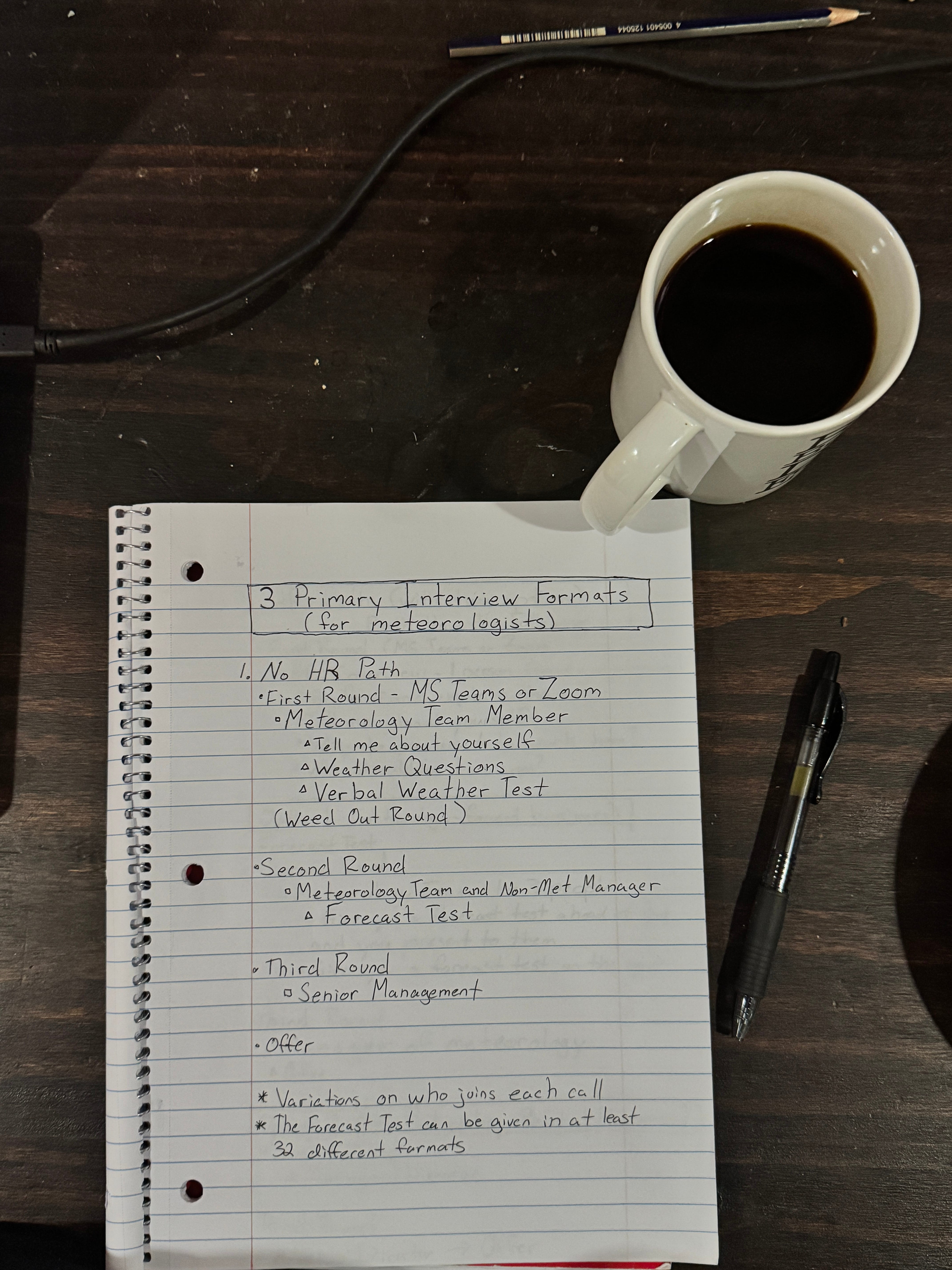
There are three popular formats:
NO HR - that’s a flat company that basically means you’re going to talk immediately to either the meteorology manager or, if you’re applying with an energy trading firm that hires meteorologists, you might talk directly with the traders, who know about weather; they’re not meteorologists, but they have a good grasp on what’s going on. So if you talk to them in those kinds of interviews, it can be very surprising how fast you go from hello to getting weather questions and maybe even getting a verbal test.
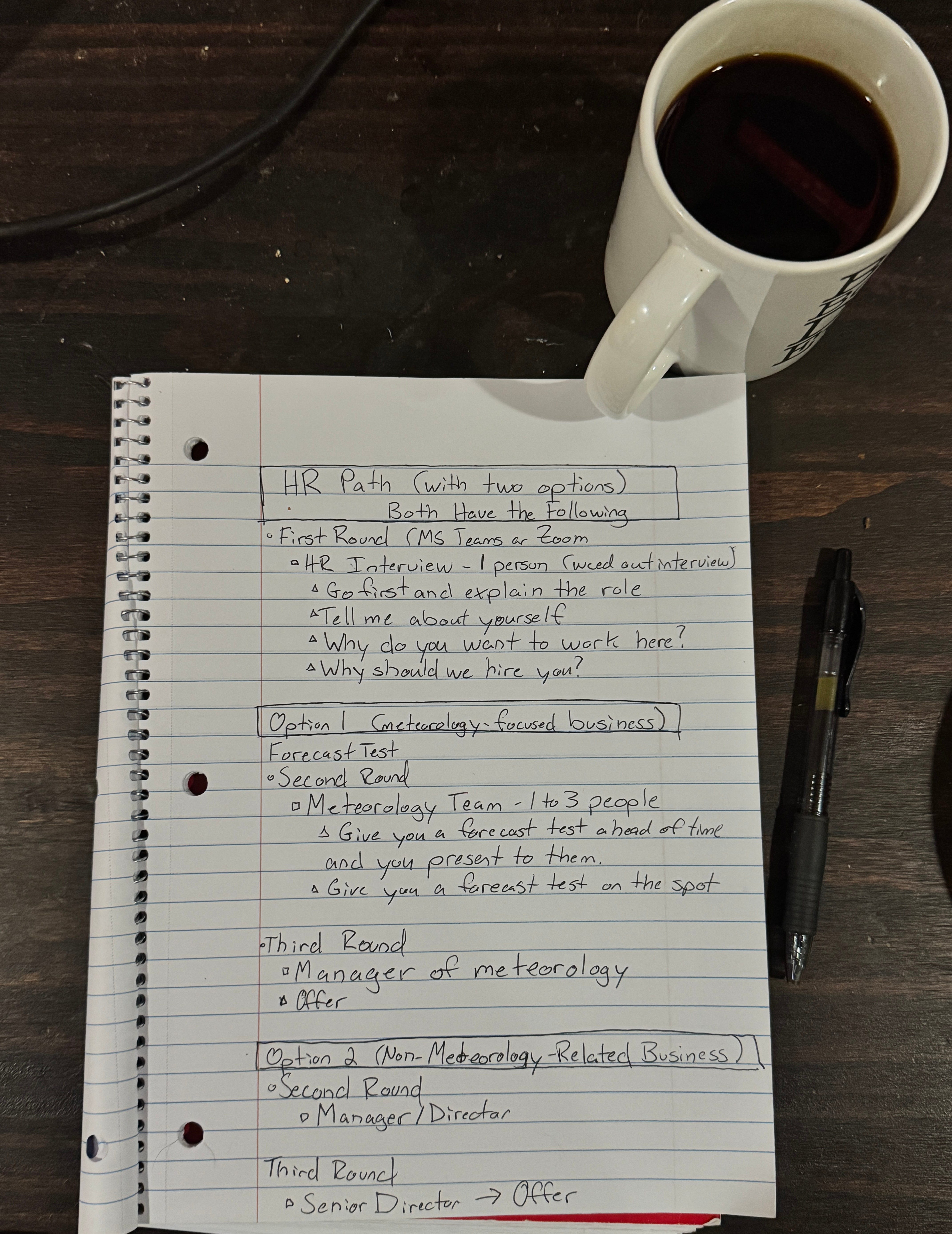
With the HR option, you talk to an HR person first, and then one path goes off and does not have a forecast test, and one does. The forecast test option will either email you ahead of time and say, “present this on the day of the interview,” or they’ll give you an interview on the spot during the interview. The interviewers may tell you ahead of time or not.
With the meteorology team, which is usually about 1-3 people, they all have a set list of questions to ask you (each one has 4-8 questions they’re going to ask). They’ve all talked beforehand and strategized about how they will take turns asking questions, or they may be more impromptu. These interviews last about 1 hour.
The other option is that you go through HR, they ask HR questions, and then there is no forecast test. Instead, the questions are more non-meteorological and more specific to the type of work. So, for example, a wildfire meteorologist would be questioned about how wildfires behave, how fire crews work with different levels of people in charge, how they work when there’s a fire, and how you would brief those people about the risks of the fire. It’s more about how you would do the job, but not necessarily specifically about the weather. Once you make it through this round, you talk to a senior person and then get the offer.
Of course, there is variation with any job, and so this is just my experience interviewing with dozens of companies across the US and the World, but not every single kind of company. Also, this is just in the private industry, not NOAA, TV, Academia, or the Military.
If you have any more questions, let me know.
Good Luck and have a Great Day!


